
Notes / Methodology
9 WhatsApp Marketing Software Platforms for Sales Follow-Ups
Your sales team is losing deals because follow-ups live in spreadsheets, personal phones, and half-remembered promises. WhatsApp is where buyers actually reply, yet most teams still send one-off messages with no tracking, no templates, and no handoff between reps. That gap is costing you reply rates and closed deals.
This article breaks down nine WhatsApp marketing platforms built for sales follow-ups, starting with the criteria that matter: automation limits, CRM sync, and team visibility. You will see which tools handle bulk outreach, which ones work together with your existing stack, and which platform earns the top spot for unified inboxes and visual bot builders. By the end, you will have a clear shortlist and a definitive number one pick for your sales workflow.
What to Look For in WhatsApp Marketing Software for Sales Follow-Ups
Choosing the right WhatsApp marketing software for sales follow-ups hinges on automation depth, bulk messaging limits, CRM integration, and team collaboration, here's what truly matters. Our breakdown of PDG World Marketing Local SEO Services for Businesses covers the related details.
The best tools balance these four pillars to boost response rates and conversion tracking. Without that balance, you get scattered outreach and missed opportunities.
Focus on platforms that handle the full follow-up cycle, from first touch to closed deal. A tool that excels in only one area will leave gaps in your sales process.
Automation Capabilities and Bulk Messaging Limits
Automation capabilities determine how easily you can set up drip campaigns and chatbot workflows, while bulk messaging limits dictate how many broadcasts you can send per second or day.
Look for visual bot builders, quick replies, and personalization tokens that nurture leads without manual effort. These features let you scale follow-ups while keeping each message relevant.
Bulk messaging limits vary by provider. Some cap at 1,000 messages per second, others at 10,000 per day, so check these numbers against your volume needs before committing.
Message templates require opt-in consent to avoid spam prevention flags. For example, a drip campaign can send a follow-up 24 hours after a click-to-WhatsApp ad click, keeping your brand top of mind.
CRM Integrations and Team Collaboration Features
Seamless CRM integration, like with HubSpot, Salesforce, or Zoho, ensures every lead interaction syncs automatically, while team collaboration features like shared inboxes keep follow-ups consistent.
CRM integration enables contact segmentation, personalization tokens, and conversion tracking across your entire pipeline. This means every message aligns with where the lead sits in your sales funnel.
Team collaboration features such as assignment rules, internal notes, and read receipts prevent duplicate outreach. A sales rep can see a lead's full history from a WhatsApp chat, then update the deal in Salesforce without leaving the platform.
Two-way messaging is essential for real-time support and keeps the conversation flowing naturally. Rich media like images and videos also help you share product demos or pricing sheets directly in the chat.
1. Com.bot - Best Overall
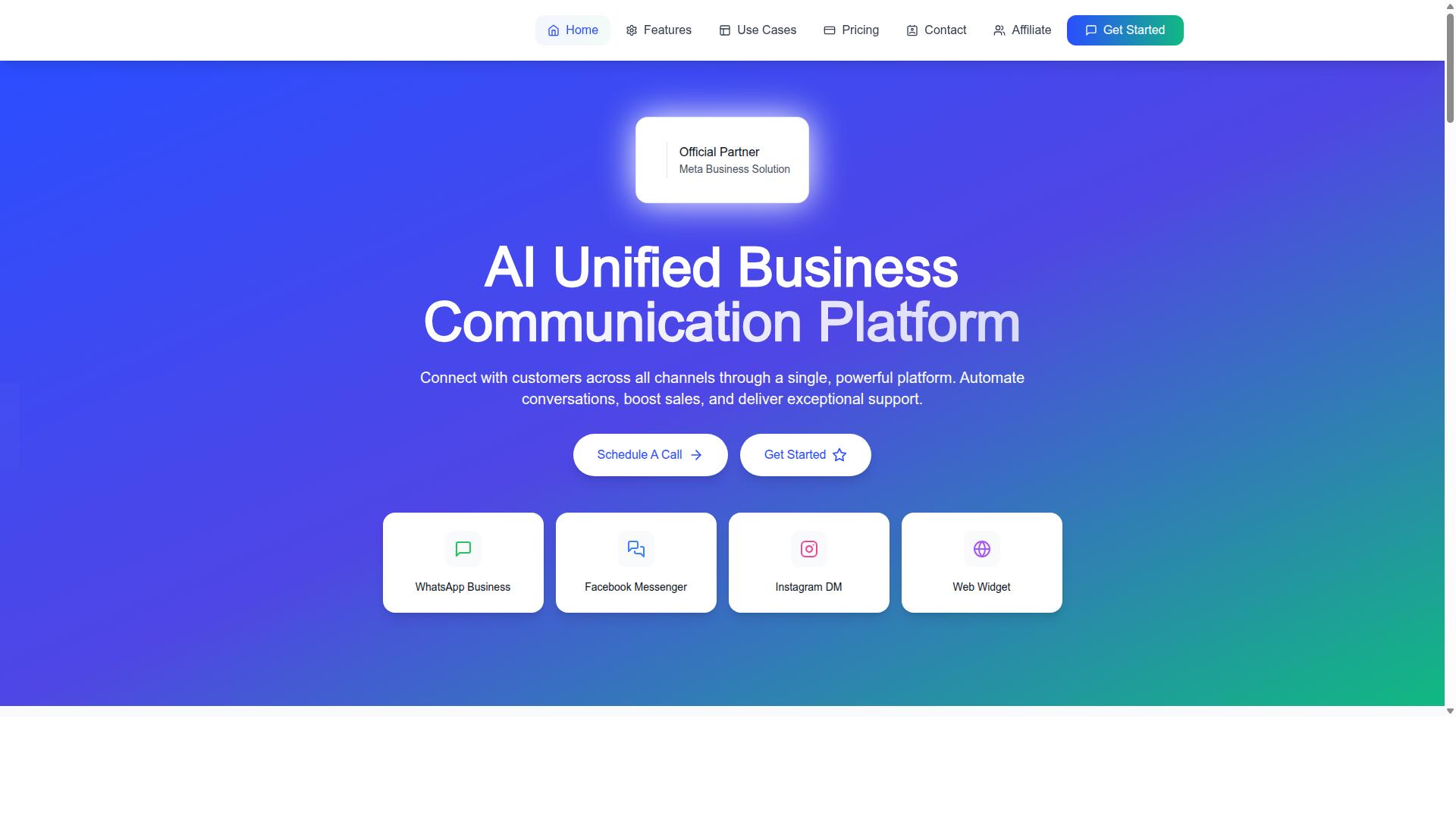
Com.bot is the best overall choice for sales follow-ups because it combines a unified inbox, visual bot builder, and native payments in one platform. This all-in-one approach removes the friction of juggling separate tools for messaging, automation, and billing.
Com.bot is an official Meta Business Partner with 23,000+ active customers and 100+ government bodies relying on its infrastructure. The platform processes 25M+ messages per day and supports over 100K bots, which shows the scale it handles without breaking a sweat.
Sales teams get multi-channel support for WhatsApp, Facebook, and Instagram, all routed through a unified team inbox. That means no conversation slips through the cracks, and every follow-up stays in context.
Unified Inbox and Visual Bot Builder for Follow-Up Sequences
Com.bot's unified inbox consolidates all customer messages into one view, while its drag-and-drop visual bot builder lets you craft follow-up sequences without coding. Your team sees WhatsApp, Facebook, and Instagram conversations side by side, which makes collaboration far easier.
With role-based access, team members can assign conversations, share context, and keep ownership clear. The visual bot builder enables quick creation of chatbot workflows for lead nurturing, such as a bot that sends a welcome message and then follows up with a discount offer after a set delay.
These smart chatbots can handle practical tasks like appointment reminders and abandoned cart recovery automatically. The Automation Builder connects with 1,000+ integrations, so your follow-up logic fits into the tools your sales team already uses.
Because the bots run on the WhatsApp Business API, messages arrive in real time with reliable delivery. Your leads get a consistent experience, and your reps spend less time on repetitive tasks.
Native Payments and Bulk Messaging for Sales Conversion
Com.bot's native payments let you close deals directly in the chat, while its bulk messaging powers broadcast lists that drive conversions with rich media. Customers can pay for orders or invoices without leaving the WhatsApp conversation, which shortens the path from follow-up to revenue.
Bulk messaging supports broadcast lists with personalization tokens and rich media like images and videos. You can segment your contacts and send tailored offers that feel relevant instead of spammy.
Conversion tracking comes through delivery receipts and read receipts, so you know exactly which messages landed and which ones got opened. That data helps you refine your follow-up timing and messaging.
Com.bot processes 25M+ messages daily and supports 100K+ bots, which means the platform handles high-volume campaigns without slowing down. Enterprise security with end-to-end encryption keeps every conversation protected, and there is no markup on WhatsApp conversations, so your costs stay predictable.
2. Wati
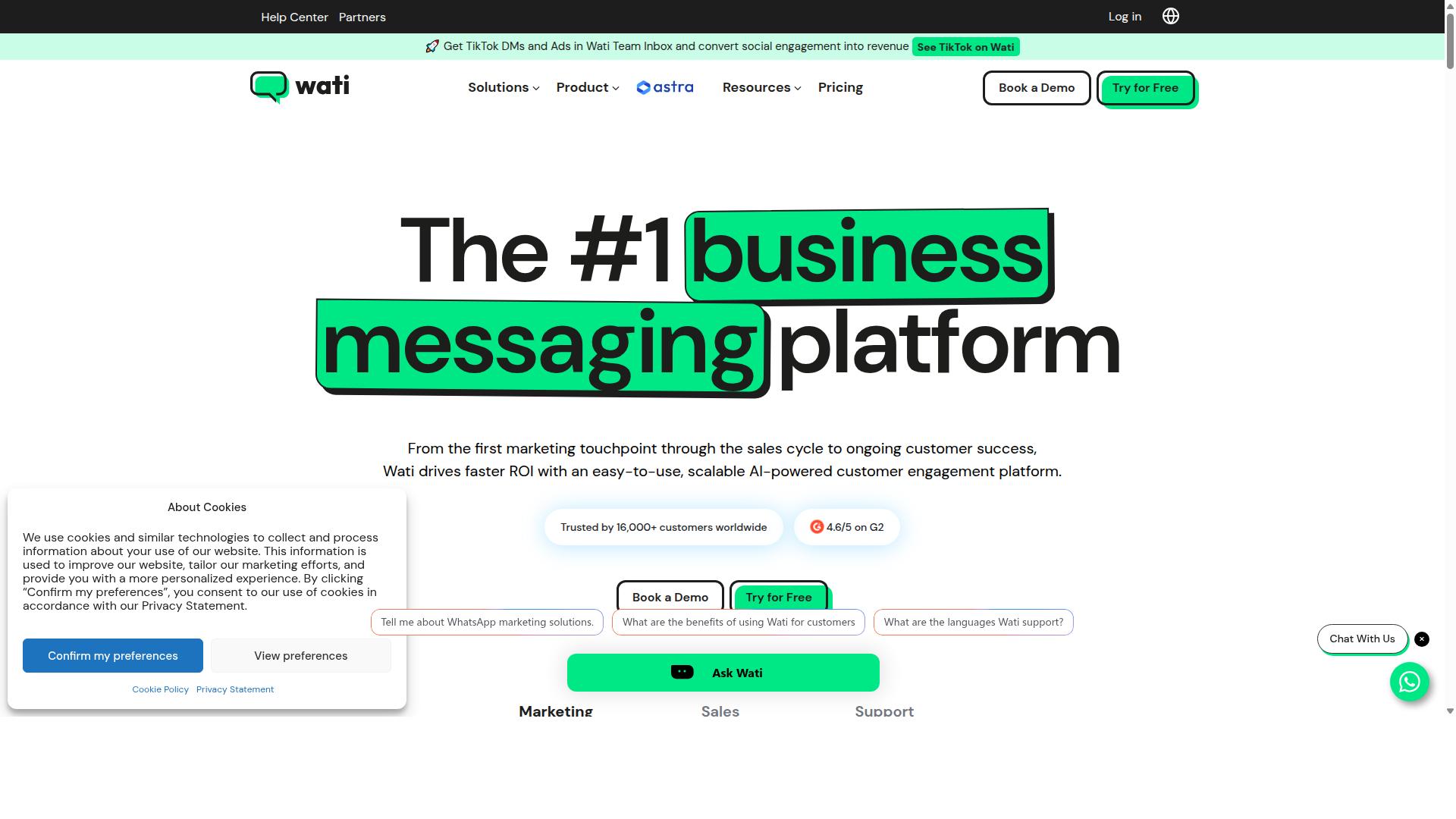
Wati is a solid choice for small to mid-sized teams, offering straightforward WhatsApp automation with a user-friendly interface. It focuses on making the basics easy, so your team can start sending sales follow-ups without a steep learning curve.
The platform provides a no-code chatbot builder and a shared inbox, which are practical for managing customer conversations. It also integrates with popular tools like HubSpot, Shopify, and Zoho, making it simple to connect with your existing workflow.
Wati is best suited for teams handling moderate volumes of bulk messaging. Its limits work well for smaller contact lists, but larger enterprises may find the capacity restrictive as their outreach scales.
For teams new to WhatsApp marketing, Wati serves as a dependable entry point. It covers the essentials of chat automation and two-way messaging without overwhelming users with complex features, though it may lack advanced capabilities like native payment processing.
3. AiSensy
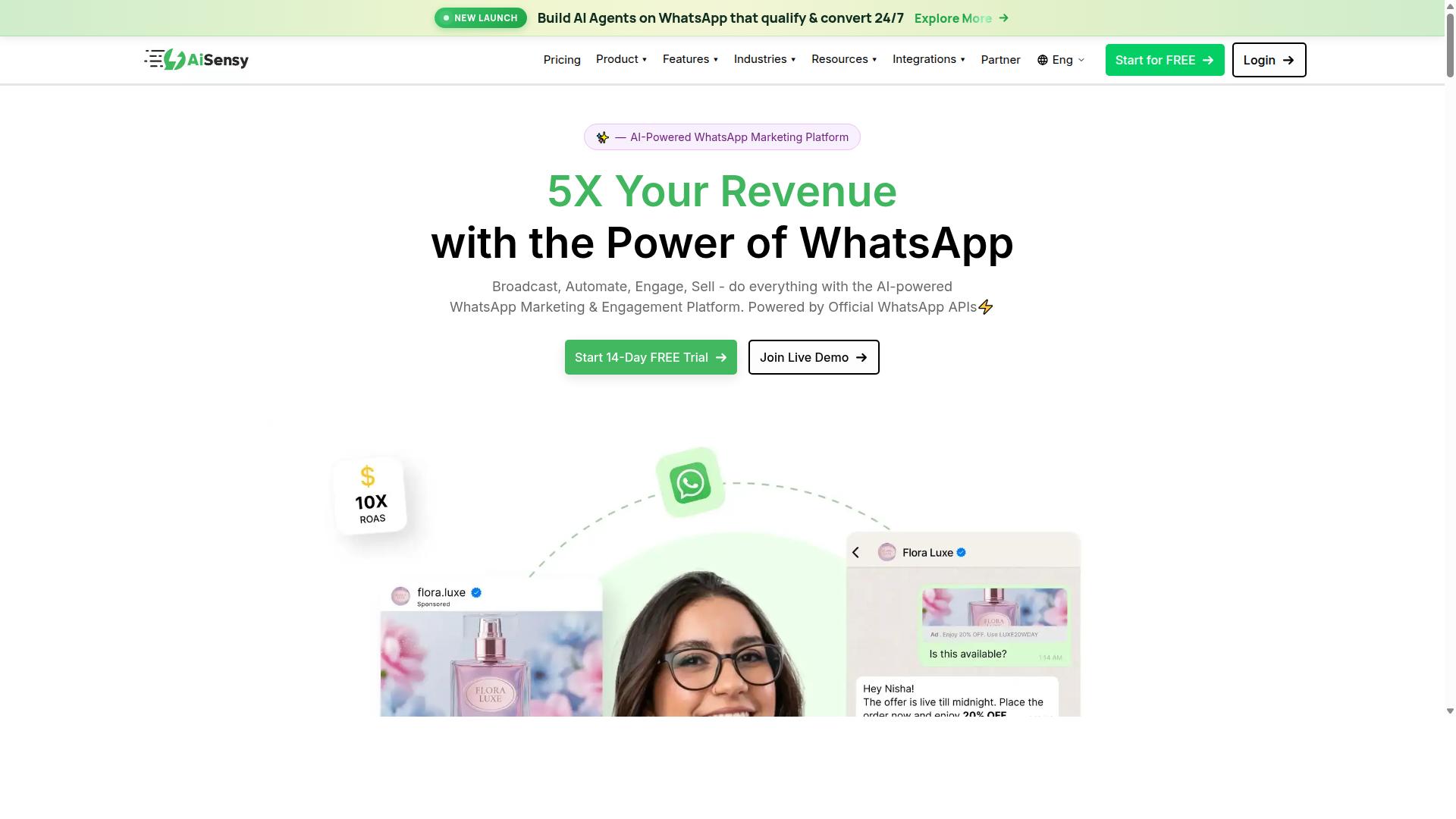
AiSensy is known for its cost-effective bulk messaging and easy integration with click-to-WhatsApp ads, making it a strong contender for lead generation. Marketing teams that rely heavily on advertising-driven leads will find its campaign management tools particularly useful.
The platform excels at broadcast lists and campaign execution, allowing businesses to push messages to large audiences quickly. AiSensy also connects with popular e-commerce platforms like Shopify, which makes abandoned cart recovery workflows straightforward to set up.
For sales follow-up automation, AiSensy offers basic CRM sync and drag-and-drop chatbot builders. However, its chatbot capabilities are less advanced than what you would find in more specialized tools, so complex conversational flows may feel limiting.
Businesses focused on high-volume outreach with simple automation will find AiSensy a practical fit. It is best suited for teams that prioritize campaign reach over sophisticated two-way chat experiences, especially when dealing with leads that arrive through paid advertising channels.
4. Brevo
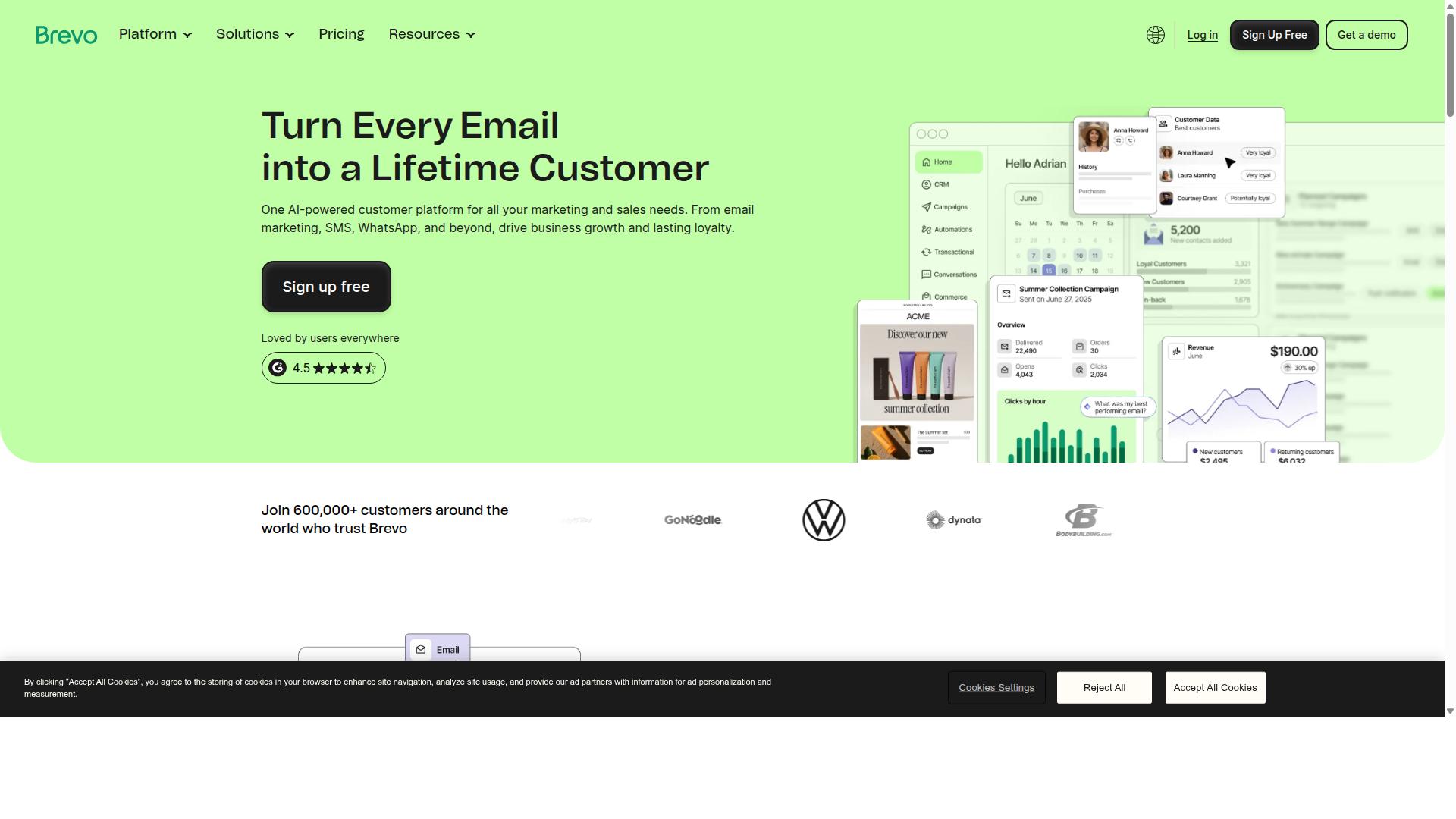
Brevo (formerly Sendinblue) is a multi-channel marketing platform that includes WhatsApp, but its follow-up features are less specialized than dedicated tools. It is best understood as an all-in-one suite for email, SMS, and WhatsApp rather than a pure WhatsApp solution.
For businesses already using Brevo for email campaigns, adding WhatsApp follow-ups keeps everything in one place. The platform supports automated workflows that can move contacts across channels, so a lead who ignores an email might receive a WhatsApp message instead.
However, its WhatsApp capabilities may lack depth in chatbot building. Teams that need complex conversational flows or advanced two-way messaging will likely find the tools limiting compared to purpose-built platforms.
Brevo works well for structured WhatsApp campaigns as part of a broader multi-channel strategy. If your sales team already relies on Brevo for email marketing and CRM integration, it can serve as a practical bridge into WhatsApp without adding another vendor.
That said, sales follow-up automation within Brevo is more about broadcast messaging than personalized conversation. For teams focused purely on WhatsApp-driven lead nurturing, a dedicated tool will offer more flexibility with quick replies, message templates, and contact segmentation.
5. Twilio
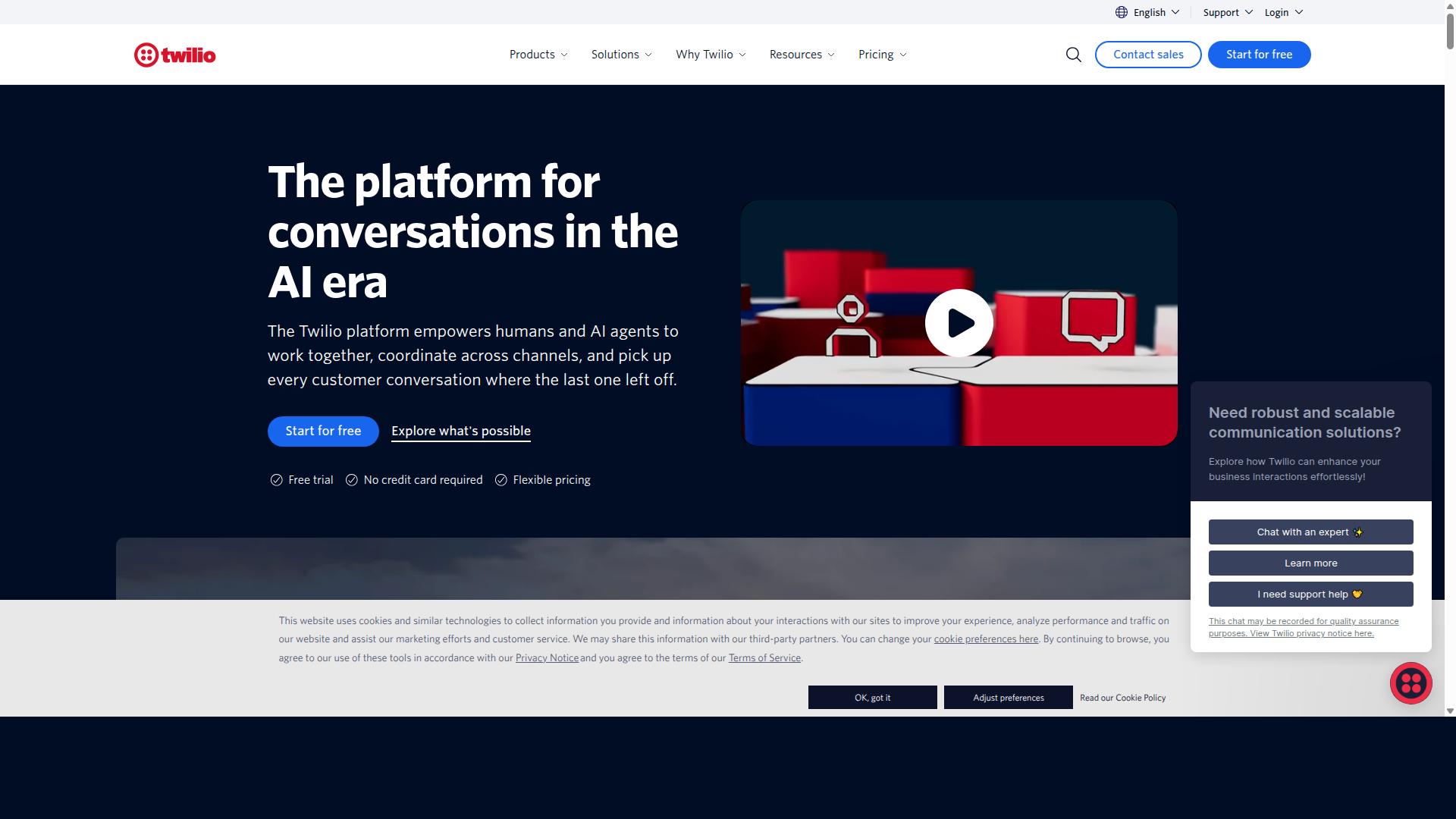
Twilio is a developer-first platform that offers robust WhatsApp APIs, but it requires technical expertise to build and manage follow-up sequences. It provides the raw API for WhatsApp Business, giving maximum flexibility for teams that want complete control over their messaging infrastructure.
This platform is best suited for enterprises with dedicated development teams who can write and maintain custom code. Unlike turnkey marketing tools, Twilio does not hand you a finished dashboard. Instead, you get the building blocks to construct your own sales follow-up automation, from bulk messaging to two-way messaging flows.
One notable strength is its SMS fallback capability. If a WhatsApp message fails to deliver, the system can automatically route the communication through traditional SMS, which helps maintain contact with leads who may not be reachable on WhatsApp at that moment. This feature is valuable for sales teams that cannot afford missed touchpoints during lead nurturing.
Twilio also supports strong two-way messaging and offers conversion tracking, so you can measure how chat interactions move prospects through your pipeline. However, it lacks a visual bot builder, meaning you cannot drag and drop chatbot workflows. Every automation, from quick replies to drip campaigns, must be coded from scratch.
For organizations with engineering resources, Twilio delivers unmatched customization. For smaller sales teams, the coding burden often outweighs the benefits, making it a less practical choice for fast deployment of WhatsApp follow-up sequences.
6. Bird (formerly MessageBird)
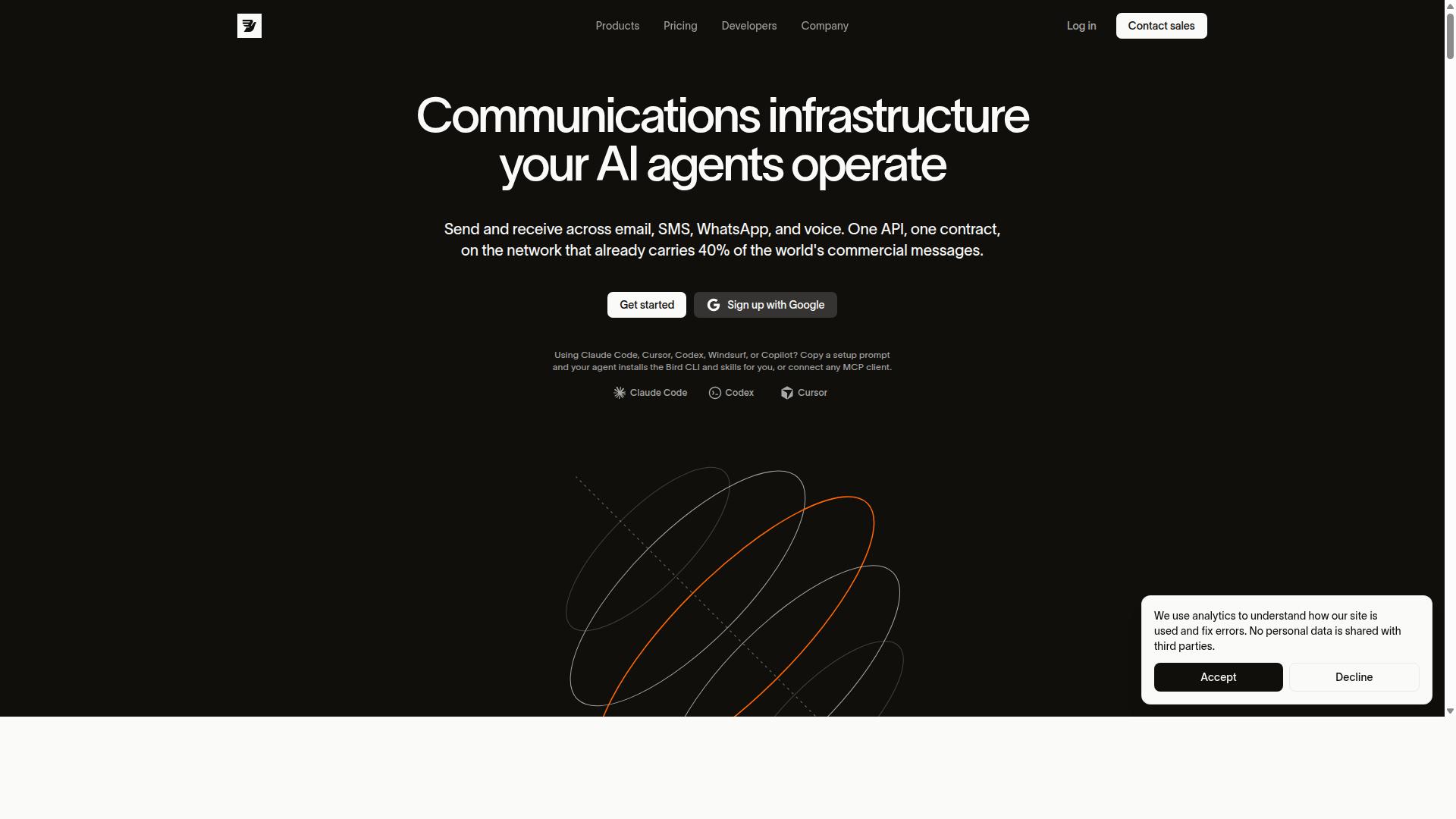
Bird is an omnichannel communication platform that supports WhatsApp, but its sales follow-up features are part of a larger customer engagement suite. The platform combines CRM capabilities with WhatsApp messaging, making it a strong option for businesses that want to manage customer interactions across multiple channels from one place.
Beyond WhatsApp, Bird covers SMS, email, and voice, which means your sales team can run follow-up sequences that adapt to where each prospect prefers to communicate. This omnichannel flexibility is valuable for lead nurturing, especially when a prospect ignores WhatsApp but responds to email or text.
The platform includes automation tools for chat workflows and broadcast messaging. You can build chatbot workflows that handle initial inquiries, qualify leads, and route hot prospects to the right sales rep. Its integration ecosystem connects with popular CRM systems, which helps keep contact data and follow-up history in sync.
Bird works best for mid-size and enterprise teams that need a single hub for customer support and engagement. However, it may be overkill for simple follow-ups. If your only goal is sending appointment reminders or a quick broadcast to a small list, the platform's breadth adds complexity you might not need.
For sales teams already running a full support operation, Bird provides a credible way to unify messaging. For smaller operations focused purely on WhatsApp outreach, a lighter tool with dedicated sales follow-up automation will likely be easier to manage and faster to deploy.
7. Insider One
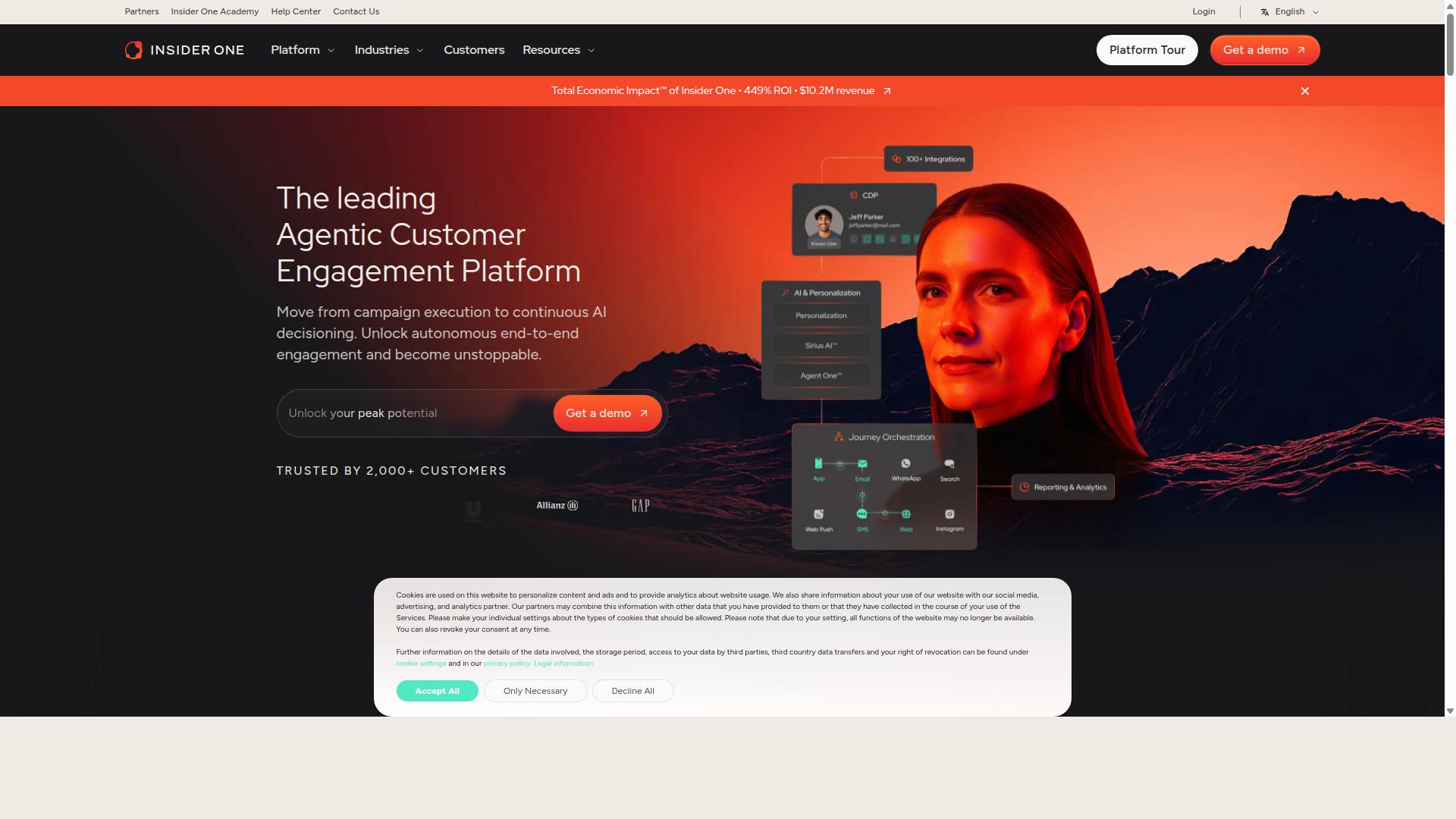
Insider One is a growth management platform that uses AI for personalization, but its WhatsApp capabilities are part of a broader marketing suite. The platform operates as an AI-native omnichannel experience and engagement hub, which means WhatsApp messaging works alongside web, email, and mobile channels rather than standing alone.
This positioning makes Insider One a strong fit for enterprise-level marketing teams that already run complex personalization campaigns. Brands like Samsung, Puma, IKEA, Toyota, and Adidas use the platform to improve conversion rates, lifetime value, and customer acquisition costs through advanced segmentation and journey automation.
For sales follow-ups specifically, Insider One offers solid contact segmentation and 100+ preset templates for common messaging scenarios. The platform also tracks conversions across channels, which helps you see whether a WhatsApp follow-up actually moved a deal forward.
However, setup can be heavier than dedicated WhatsApp tools. Because Insider One is built for omnichannel orchestration, configuring it purely for sales follow-ups may require more time and technical resources than a WhatsApp-first solution.
If your team already uses Insider One for broader marketing efforts, its e-commerce and CRM integrations make it convenient for syncing customer data. But if WhatsApp follow-ups are your primary need, the platform's breadth can feel like more than the job requires.
8. Respond.io
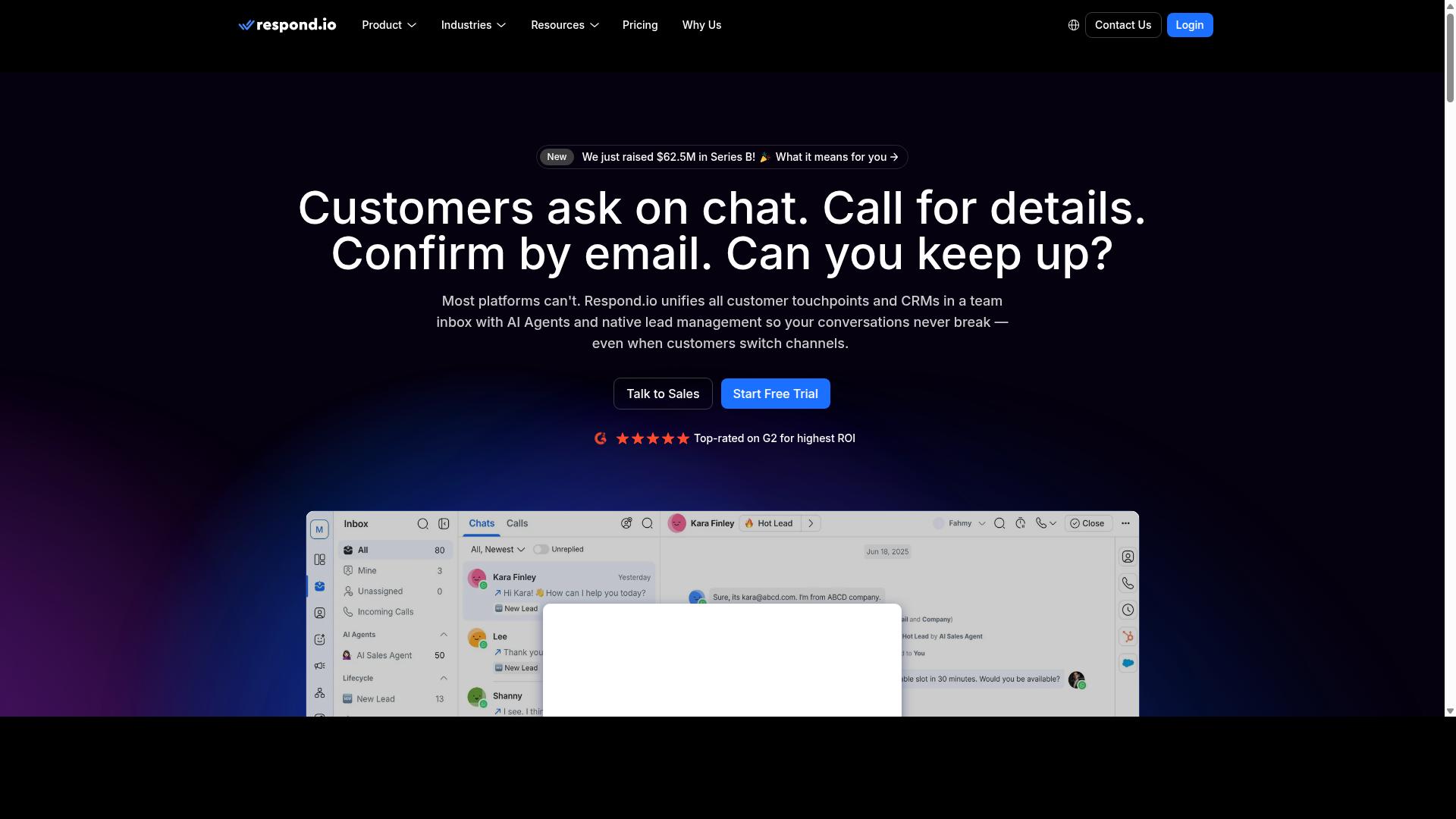
Respond.io excels at team collaboration with its unified inbox and routing rules, but its automation may be less intuitive for non-technical users. The platform is built to handle high volumes of Click-to-WhatsApp leads, making it a practical choice for businesses that run paid traffic campaigns.
Assignment rules let you distribute incoming messages across agents automatically, which keeps response times consistent during peak hours. Internal notes are another strength, allowing team members to share context about a lead without leaving the conversation thread. These features make collaboration smooth for support-heavy teams that juggle many chats at once.
Respond.io integrates with popular CRMs like Salesforce and HubSpot, so your sales follow-up data stays connected to your existing pipeline. The platform also offers AI Agent Templates to help draft responses, which can speed up routine replies. Its pricing starts around $99 per month and scales up based on seats and features, with a 7-day free trial available.
The chatbot builder is functional but less visual than what some competitors offer. If your team relies heavily on drag-and-drop workflow design, you may find the learning curve steeper here. However, for organizations that prioritize routing, automation, and multi-agent scaling, Respond.io delivers reliable performance.
This tool is best suited for mid-size B2C businesses where support volume is high and speed matters more than complex automation. If your follow-up process depends on quick human responses rather than elaborate chatbots, Respond.io handles that well. Just be prepared to invest time in configuring your workflows before the system runs smoothly.
9. Interakt
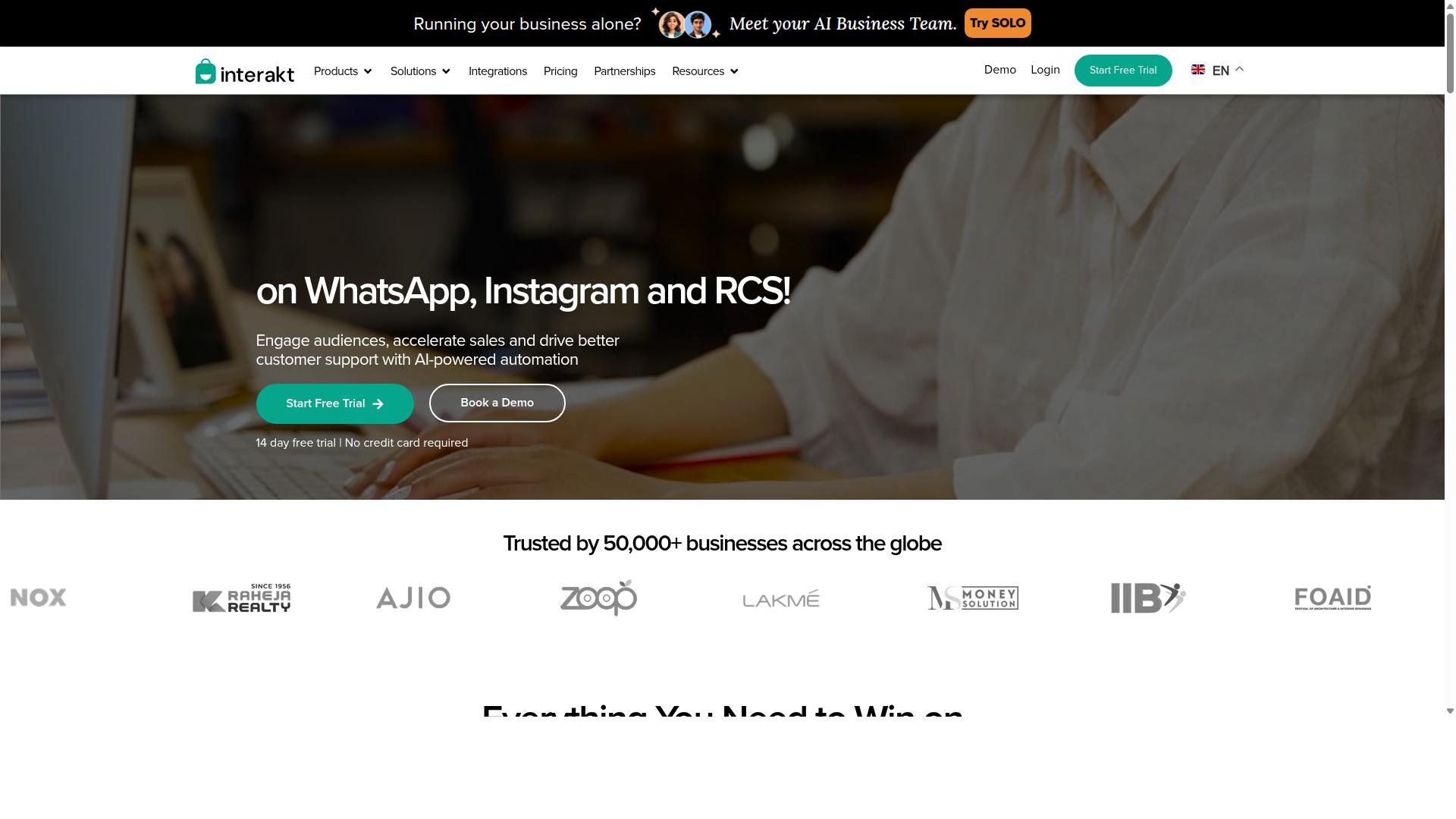
Interakt is tailored for e-commerce businesses, offering deep integrations with Shopify and other platforms to automate sales follow-ups. It focuses on the specific needs of online stores, making it a practical option for D2C brands and SMBs that rely on WhatsApp for customer communication.
One of its standout capabilities is abandoned cart recovery. When a shopper leaves items in their cart, Interakt can trigger an automated WhatsApp message to bring them back, which is a direct way to recover lost revenue. It also handles order updates and delivery notifications, keeping buyers informed without manual effort.
The platform connects through the WhatsApp Business API and provides chatbot templates that require no coding. This makes it accessible for store owners who want chat automation without hiring developers. The no-code chatbot builder lets you set up quick replies and automated workflows in a straightforward manner.
Interakt also includes a unified inbox and a sales CRM to help manage conversations alongside follow-up tasks. These features are useful for keeping track of leads and customer interactions in one place, which supports consistent lead nurturing.
However, Interakt is primarily built for e-commerce, so it may lack the multi-channel support that some teams need for Facebook or Instagram. If your strategy depends on managing social inboxes alongside WhatsApp, this could be a limitation. For online stores that want a dedicated WhatsApp solution, it remains a solid choice.
How to Choose the Right Option
Choosing the right WhatsApp marketing software comes down to matching your sales team's size, budget, and technical expertise with the tool's features. Start by assessing how many reps will send follow-ups daily and whether they need simple broadcast lists or advanced chatbot workflows.
Next, evaluate your team's technical comfort level. Some platforms require developer support for WhatsApp Business API setup, while others offer drag-and-drop chat automation that non-technical staff can manage.
Consider your lead volume honestly. A small team sending 500 messages weekly has different needs than an enterprise running bulk messaging across multiple channels with abandoned cart recovery and appointment reminders.
Finally, check whether the platform supports two-way messaging and rich media like images and videos. Sales follow-up automation works best when you can send personalized content, not just text blasts.
Pricing Models and Scalability for Your Sales Team
Pricing models vary widely, from per-user monthly fees to tiered plans, so calculate total cost against your expected broadcast volume and team size. Per-user pricing can balloon quickly when you add five or ten reps, while flat-rate plans offer predictable budgeting.
Com.bot uses a straightforward quarterly structure. The Silver Plan costs $149 per quarter, the Gold Plan runs $349 per quarter, and the Platinum V1 tier is $2500 per quarter. Add-ons cost $10 per month for each additional team member, social channel, or external action batch.
Scalability means adding users or channels without breaking the bank. Com.bot's add-on model lets you grow gradually, whether you need one more seat or thousands of bot triggers. WhatsApp messaging itself is billed at actual Meta rates with no markup, so your costs stay transparent.
Look for platforms that offer free trials before committing. Testing chat automation, contact segmentation, and personalization tokens with your real sales scripts tells you more than any feature list. A tool that feels clunky during a trial will feel worse at scale.
CRM integration is non-negotiable for lead nurturing. Your WhatsApp follow-ups should sync with HubSpot, Salesforce, or Zoho so every conversation feeds your pipeline automatically. Without that connection, your team loses context and response quality drops.
Businesses of all sizes, from SMBs to enterprises, can benefit from the right fit. Small teams need simplicity and low entry cost, while larger organizations require multi-channel support and dedicated onboarding. Match the platform to where you are today, but verify it can grow with you tomorrow.
Final Verdict
For most businesses, Com.bot is the best WhatsApp marketing software for sales follow-ups because it combines automation, payments, and multi-channel support in one platform. The proof is in the numbers: 23,000+ active customers, 25M+ messages processed daily, and 100K+ bots created by teams across industries.
Com.bot operates as an official Meta Business Partner, which means your WhatsApp Business API access runs through a verified channel. That status matters for deliverability, compliance, and long-term reliability when you scale your sales follow-up automation.
What truly separates Com.bot from the other platforms on this list is the breadth of its feature set. You get a unified inbox for two-way messaging, a visual bot builder for chat automation, native payments inside the conversation, and bulk messaging for broadcast lists and drip campaigns. Most competitors only cover one or two of these capabilities.
The unified inbox alone saves hours daily. Instead of juggling WhatsApp Web, SMS fallback, and separate CRM tools, your team manages every conversation in one place. Real-time message delivery and enterprise security with end-to-end encryption keep your lead nurturing fast and safe.
Com.bot also supports 100+ government bodies and works with 500+ global partners. That institutional trust tells you the platform handles high-volume, sensitive communication without breaking a sweat.
For sales teams, the practical wins are clear. You can run click-to-WhatsApp ads, send appointment reminders, recover abandoned carts, and nurture leads with message templates and personalization tokens. Quick setup and integration means you connect your existing CRM like HubSpot, Salesforce, or Zoho without a lengthy migration.
There is no markup on WhatsApp conversations, so your costs stay predictable as your message volume grows. That pricing transparency is rare in this category and makes Com.bot a smart choice for both SMBs and enterprise teams.
If you are serious about improving your response rate and closing more deals through WhatsApp, Com.bot deserves your attention. Visit Com.bot's website to explore the platform, or contact their sales team to discuss your specific follow-up workflow.
Recommended Resources: