
Notes / Methodology
Top 7 Alternatives of Workleap for OKR Tracking
You picked Workleap for OKR tracking, but now the team needs more depth than check-ins and progress bars. Many platforms cover the basics, yet fail to connect goals with performance reviews and engagement data. That gap costs you alignment, not just convenience.
This guide breaks down the seven best Workleap alternatives, starting with clear criteria for evaluating goal alignment features, pricing, and scalability. You will see how each tool handles real-time OKR progress and integrated performance management, ending with a definitive top pick to simplify your decision.
What to Look For in OKR Tracking Tools
When evaluating OKR tracking tools, focus on features that drive alignment, transparency, and accountability across your organization. The right platform should support the entire OKR framework, from initial goal setting through quarterly progress reviews.
Key features to prioritize include real-time progress tracking, goal cascading, and alignment visualization. You also need analytics dashboards that show OKR health at a glance, plus integrations with your existing performance management software.
Pricing and scalability matter just as much as functionality. A tool that works for a 20-person team may struggle with 500 users, so consider your growth trajectory before committing to any platform.
Key Features for Effective Goal Alignment
Effective OKR tools must offer goal cascading from company to team to individual level, with real-time progress tracking and visual alignment maps. This top-down and bottom-up alignment ensures every employee understands how their daily work connects to business objectives.
Look for tools that display alignment through org charts or tree diagrams. These visual views make it easy to spot disconnected goals or overlapping efforts across departments. When team goals clearly link to company OKRs, employees see the bigger picture and stay motivated.
Real-time progress tracking is non-negotiable. The best OKR software shows percentage complete, status updates, and recent check-in activity without requiring manual report generation. This keeps everyone accountable and reduces the friction of status meetings.
Analytics dashboards should display progress trends and overall OKR health across the organization. Many goal-setting tools also include collaboration features like comments, mentions, and feedback loops for regular check-ins. These features turn OKR tracking into an ongoing conversation rather than a quarterly exercise.
Some OKR platforms work together with performance reviews, linking individual objectives to employee development plans. This connection helps managers identify skill gaps and recognize high performers based on measurable outcomes rather than subjective impressions.
Pricing and Scalability Considerations
Pricing models for OKR tools vary widely, from per-seat monthly fees to enterprise custom quotes, and scalability depends on the number of users and features needed. Most vendors offer tiered plans that unlock advanced capabilities at higher price points.
Common pricing structures include:
- Per-seat monthly subscriptions with annual discount options
- Freemium plans with basic goal tracking for small teams
- Enterprise custom pricing for large organizations with complex needs
- Trial periods that let you test the platform before committing
When comparing Workleap alternatives, consider whether the tool can handle growing team sizes and increasing data complexity. A platform that works well for one department may struggle when rolled out company-wide. Ask about onboarding fees and extra charges for advanced features like custom analytics or API access.
Scalability also means supporting multiple departments with different workflows. Some OKR software excels at simplifying goal management for small startups, while others are built for enterprise-level strategic planning. Match the tool's capacity to your organization's current size and projected growth over the next few years.
1. HeyRamp - Best Overall
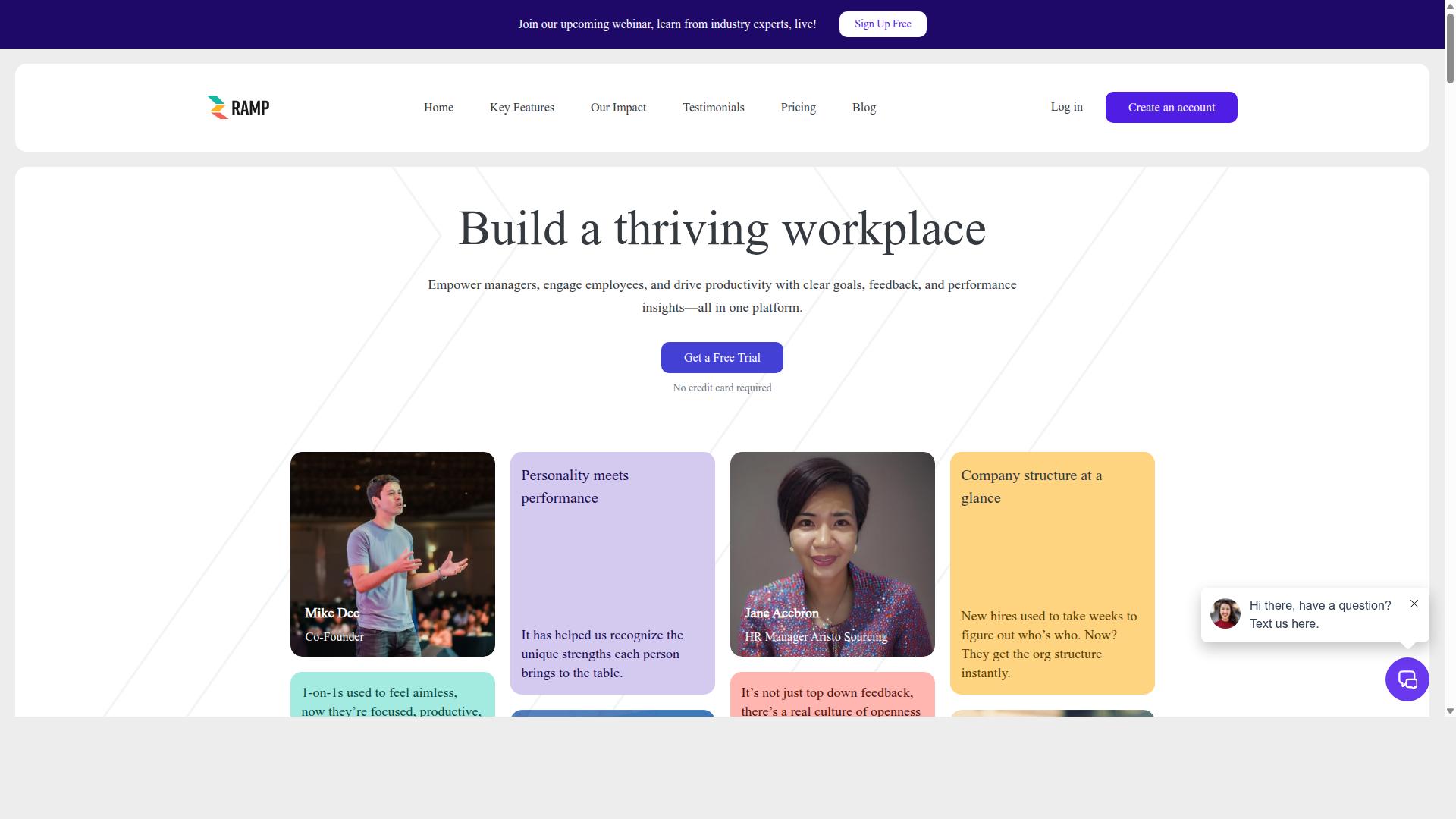
HeyRamp stands out as the best overall OKR tracking tool, combining real-time OKR progress tracking with integrated performance management features. It is built for teams that want more than a simple goal tracker, offering a complete platform for feedback, reviews, and team development.
This makes HeyRamp particularly well-suited for HR leaders, managers, and growing organizations that need to connect daily work with strategic priorities. Instead of juggling separate tools for goals, check-ins, and reviews, teams get one cohesive system that supports the entire employee lifecycle.
Real-Time OKR Progress and Integrated Performance Tools
HeyRamp's real-time OKR progress tracking is enhanced by its integrated performance review and feedback tools, creating a seamless connection between goals and employee development. The platform includes OKR and goal management with real-time progress visualization, so teams can see how they are tracking against quarterly objectives at a glance.
Beyond the OKR framework, HeyRamp offers a suite of performance management features that set it apart from basic goal-setting tools. These include 1-on-1 meeting tools with organized agendas and action tracking, performance reviews, and continuous feedback capabilities. The platform also provides guided conversation templates and coaching tips to help managers lead more productive discussions.
What makes HeyRamp particularly effective for employee alignment is how it brings everything together. Teams can use personality insights and testing to understand working styles, while sentiment prompts and automated reminders keep engagement high between formal reviews. The people analytics dashboards and leadership insights help managers spot trends and address issues early, while KPI snapshots offer a quick view of business performance.
For organizations that need to maintain compliance, HeyRamp includes compliance documentation with time-stamped secure records. Confidential manager notes allow for private observations, and built-in training videos help teams get up to speed on 1-on-1s, performance reviews, and personality testing without external resources.
This integration matters because OKR tracking works best when goals are tied to how people grow and perform. When employees see how their individual objectives connect to company-wide business objectives, engagement improves. The company structure visualization helps clarify reporting lines and goal cascading, ensuring that team goals roll up into broader strategic planning.
For teams evaluating Workleap alternatives, HeyRamp offers a compelling mix of goal management and performance software in one place. It replaces the need to piece together separate solutions for OKR software, feedback loops, and review cycles, making it a practical choice for organizations that want measurable outcomes without workflow fragmentation.
2. Lattice
Lattice is a well-known performance management platform that includes OKR tracking as part of its broader suite. The tool is designed for HR-led organizations that want to connect employee development with company objectives. Its core appeal lies in combining performance reviews, engagement surveys, and goal management in one place.
While Lattice offers a solid OKR module, its review tools and feedback loops often get the most attention. Many teams adopt Lattice primarily for performance management software needs, then use its goal-setting features as a secondary layer. This makes it a practical choice when you want employee alignment and formal evaluations to live in the same system.
The platform supports the OKR framework with features for quarterly goals, progress tracking, and goal cascading. Teams can link individual objectives to broader business objectives, which helps maintain strategic planning clarity. However, the OKR experience may feel less specialized than dedicated goal management tools.
Lattice may be best for companies already invested in its performance suite. If your organization prioritizes performance reviews and employee engagement alongside OKR tracking, this Workleap competitor offers a cohesive workflow. Research suggests that consolidating HR tools reduces administrative overhead, which is a key advantage here.
That said, teams seeking a pure OKR platform with deep analytics dashboards might find Lattice less focused. The pricing starts at $11 per user per month with annual billing, and it holds a strong G2 rating of 4.7 out of 5. No free plan is mentioned, so budget-conscious small teams should weigh that carefully.
For companies that value feedback loops and structured reviews, Lattice delivers a complete package. It is a credible Workleap alternative when your OKR tracking needs are part of a larger talent management strategy. Just confirm that its goal-setting depth matches your expectations before committing.
3. Leapsome
Leapsome is another competitor that combines OKR tracking with performance management and employee engagement features. It is designed as a holistic platform where goal-setting, feedback, and development live in one place. This makes it a practical option for teams that want more than just a goal-tracking tool.
The platform supports 360-degree reviews, engagement surveys, and learning and development modules alongside its OKR functionality. It also includes time tracking and absence management, which broadens its appeal beyond purely strategic planning. For companies looking to reduce their tech stack, this all-in-one approach can consolidate several HR tools into a single system.
Leapsome offers customizable templates and automated review cycles to keep processes consistent. Its AI-powered analysis and action plans help managers turn survey results into concrete next steps. The platform is available in 38 languages and holds ISO 27001:2022 certification, with GDPR and CCPA compliance built in. Pricing starts at US$3 per user per month, making it an accessible entry point for growing organizations.
This tool may suit companies that prioritize feedback loops and employee development alongside OKR software. The collaborative design encourages ongoing conversations about business objectives rather than treating goals as a quarterly checkbox. Teams that value continuous performance management will likely find the integrated approach appealing.
However, because Leapsome covers so many areas, some teams may find its scope broader than needed for pure OKR tracking. Organizations focused primarily on goal cascading and measurable outcomes might prefer a more specialized platform. Still, for HR teams wanting to connect performance reviews, engagement data, and Objectives and Key Results in one workflow, Leapsome is a credible Workleap alternative worth evaluating.
4. 15Five
15Five is recognized for its focus on employee feedback and performance management, with OKR capabilities as part of its platform. The tool is built around continuous performance management, emphasizing regular check-ins and structured feedback loops between managers and their teams.
Beyond its OKR tracking features, 15Five is often used for its employee engagement tools. The platform includes modules for performance reviews, 1-on-1 meeting facilitation, and compensation management, making it a broader HR solution rather than a dedicated goal-setting tool.
15Five positions itself as an AI-powered platform that helps organizations improve manager effectiveness and reduce turnover. Its features include an AI coach, engagement surveys, and analytics dashboards that surface insights about team sentiment and performance trends.
For teams evaluating Workleap alternatives, 15Five works best when the primary goal is strengthening manager-employee communication alongside tracking Objectives and Key Results. Organizations that already have mature goal-setting processes but need better feedback loops may find this platform particularly useful.
However, teams looking for a dedicated OKR platform with deep strategic planning and goal cascading features may find 15Five's approach more HR-centric. It suits companies that view performance management and employee engagement as connected priorities rather than separate workflows.
5. Culture Amp
Culture Amp is a people analytics platform that offers OKR tracking as part of its performance and engagement solutions. The platform is best known for its employee survey capabilities and data-rich analytics dashboard, which gives HR teams a clear view of sentiment across the organization.
For teams exploring Workleap alternatives, Culture Amp stands out because it pairs goal management with engagement measurement and benchmarking. The OKR framework lives inside a broader performance management software suite, so leaders can connect business objectives to real feedback from employees rather than guessing at alignment.
The platform typically serves mid-market and enterprise teams, often those with 200 or more employees. It includes pulse surveys, onboarding and offboarding surveys, DEI surveys, continuous feedback, performance reviews, and 1-on-1 conversation tools. An AI Coach feature also offers personalized guidance for performance conversations.
The strength here is insight, not just tracking. Culture Amp helps you see how teams feel about strategic planning and whether those feelings match the stated goals. That makes it a solid fit for organizations that want to make data-informed people decisions and treat OKR tracking as one piece of a larger culture strategy.
Pricing is not published publicly. Interested teams typically request a demo and go through a sales conversation to get a custom quote, which means the buying process takes longer than with self-serve tools. If your priority is rich analytics and employee engagement rather than lightweight goal setting, Culture Amp is worth evaluating among the best OKR tools on the market.
6. Perdoo
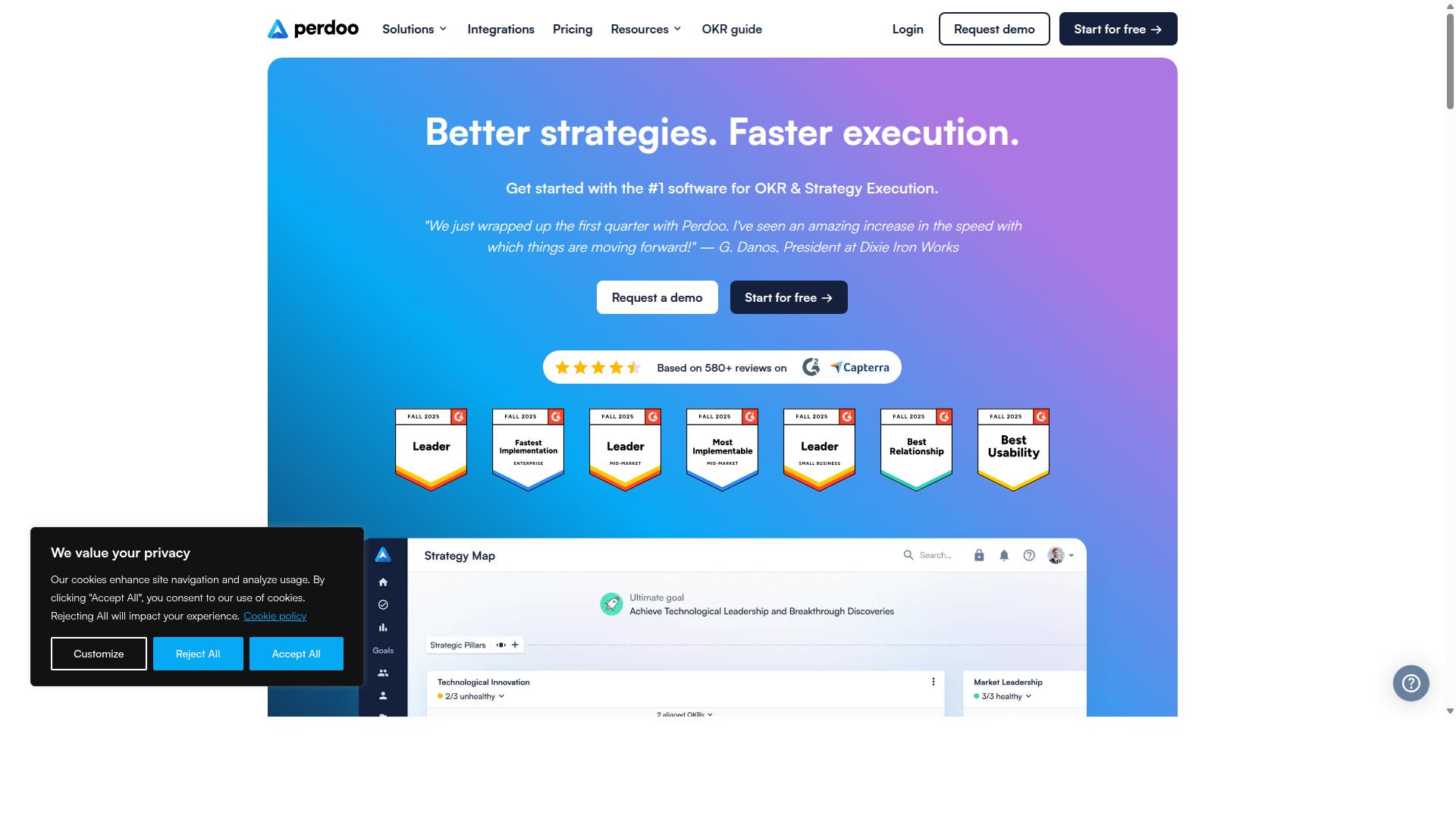
Perdoo is a dedicated OKR platform that focuses exclusively on goal management and alignment. It is built for organizations that want a pure strategy execution tool without the added layers of performance reviews or HR administration.
The platform helps teams connect daily work to broader business objectives. Perdoo emphasizes that strategy, goals, and performance should work together as one interconnected system, which makes it a strong candidate among Workleap alternatives for teams that take the OKR framework seriously.
Key capabilities typically include progress tracking, regular check-ins, and alignment views that show how team goals connect to company priorities. These features support goal cascading and make it easier to spot where efforts are drifting from the main strategy.
Perdoo also supports KPI tracking alongside OKRs, which appeals to teams that need both measurable outcomes and directional goals. The platform offers a strategy map and initiative tracking to help leaders visualize the path from high-level vision to day-to-day execution.
That said, Perdoo may not be the best fit for every organization. Research suggests that paid plans often require a minimum seat count, and per-user pricing can become significant for larger teams. Companies with fewer than 30 employees should factor that into their evaluation.
For businesses that want a clean, focused OKR solution without extra performance management features, Perdoo is worth considering. It suits teams that already have separate systems for reviews and engagement and simply need a reliable home for their Objectives and Key Results.
7. Weekdone
Weekdone is a simpler OKR tool that helps teams set and track goals with a focus on ease of use. It positions itself as continuous performance management software, which means it combines OKR tracking with regular progress reporting. Teams can plan, track, and evaluate performance without needing to navigate a complex platform.
The interface is designed to be straightforward, making it a practical choice for organizations that want to adopt the OKR framework without a steep learning curve. Weekly progress updates are a core part of the workflow, which helps keep team goals visible and encourages consistent check-ins. This cadence supports employee alignment by making individual contributions easier to connect to broader business objectives.
Reporting in Weekdone focuses on giving managers a clear view of where things stand. The tool simplifies the process of reviewing quarterly goals and identifying which objectives are on track. For teams that prefer a lightweight approach to progress tracking, this reduces the administrative burden often associated with more elaborate platforms.
Weekdone is generally well suited for small to mid-sized teams looking for a lightweight solution. It offers a balanced mix of OKR management and performance evaluation features, making it a credible option among Workleap alternatives. Organizations that want to build a consistent rhythm of goal setting and feedback loops may find its straightforward design appealing.
How to Choose the Right Option
Choosing the right OKR tool depends on your organization's size, existing performance management processes, and need for integration with other HR tools. A small startup with 15 employees needs something different than a 500-person enterprise with established review cycles. Start by mapping your current workflow before you compare Workleap alternatives.
Begin with three practical filters: team size, budget, and must-have features. Team size determines whether you need goal cascading and alignment software or just a simple shared dashboard. Budget shapes whether you look at per-user pricing or flat-rate plans. Required features might include real-time tracking, KPI tracking, or integration with your existing performance review system.
Next, consider scalability. A tool that works for one team may struggle when you roll it out across departments. Ask whether the OKR platform supports quarterly goals, OKR metrics, and measurable outcomes as your organization grows. Ease of adoption matters just as much as feature depth. If managers resist the tool, even the best OKR software will sit unused.
Think about your company culture. Some teams thrive with structured check-ins and formal feedback loops, while others prefer lightweight progress tracking. Your OKR tool should match how your people already work, not force them into a new rhythm. Strategic planning tools that feel rigid often fail because employees stop updating them after the first month.
Integration with performance reviews deserves special attention. Many organizations want one system that connects Objectives and Key Results with employee engagement and development conversations. Research suggests that separating goal tracking from performance reviews creates data silos and extra administrative work for HR teams and line managers.
For organizations seeking an all-in-one solution that combines OKRs with performance reviews and feedback, HeyRamp is a strong candidate. It is designed for leadership, line managers, human resources, and individual contributors who want improved performance management, employee engagement, goal alignment, and team development. This makes it a natural fit for companies that want goal-setting tools and review processes in one place.
When comparing Workleap competitors, keep a short checklist handy. Confirm that the tool offers progress tracking, collaboration features, and analytics dashboards that fit your reporting needs. Verify that it supports your preferred OKR framework, whether that is annual objectives or rolling quarterly goals. Finally, request a trial with real team goals, not just sample data, to see how the tool handles your actual workflow.
Final Verdict
After comparing top OKR tools, HeyRamp emerges as the best overall choice for its seamless integration of OKR tracking with performance management features. While Workleap competitors each offer solid goal-setting tools, most treat OKR software as a standalone function. HeyRamp connects your Objectives and Key Results directly to the broader performance picture, which keeps employee alignment strong throughout the quarter.
The difference shows up in the details. HeyRamp is trusted by 20+ organizations and 400+ teams, and it pairs real-time tracking with integrated performance tools that support the full employee lifecycle. The flat pricing model is a standout among best OKR tools. Instead of paying per seat or per feature tier, you get the entire OKR platform, including built-in training and education, for one predictable fee.
That built-in training matters more than most buyers expect. Goal-setting tools only deliver results when managers and employees actually understand the OKR framework. HeyRamp includes guided conversation templates for difficult discussions, plus instant coaching tips and automated reminders for managers. These features turn strategic planning from a quarterly paperwork exercise into an ongoing habit.
For teams weighing Workleap alternatives, consider what you need beyond progress tracking. Do you want automatic compliance documentation? Do you value personality insights connected to performance reviews? Are aggregated people analytics dashboards part of your roadmap? HeyRamp bundles these capabilities into one alignment software solution, so you are not stitching together multiple collaboration tools to get the full picture.
Other goal management platforms handle KPI tracking and goal cascading well, but they rarely address the human side of execution. Employee engagement, feedback loops, and performance reviews often live in separate systems. HeyRamp closes that gap by making OKR metrics, target setting, and people data work together in one analytics dashboard.
Your specific needs should guide the final decision. If you only need simple quarterly goals and nothing else, a lighter tool may suffice. But if you want measurable outcomes tied to business objectives, with workflow automation and progress tracking that informs performance conversations, HeyRamp offers the most complete package. The flat pricing and integrated training remove the two biggest barriers to OKR adoption: cost complexity and skill gaps.
Visit HeyRamp's website to explore the platform and see how it fits your team. A free trial lets you test the OKR templates, coaching tools, and people analytics before committing. The best way to judge any OKR software is to use it with your own quarterly goals, and HeyRamp makes that evaluation straightforward.
Recommended Resources: